History of the Hamburger: What We Really Know, From 1763 to 2016
Who really invented the hamburger? A sourced timeline from 1763 to 2016 that separates documented facts from family legends, state proclamations and fakes.
The history of the hamburger starts in print with an English recipe for “Hamburgh Sausage” in 1763. The name “Hamburg steak” appears in American newspapers by 1873, and minced beef was being sold in sandwiches in the 1890s. Nobody can prove who invented the hamburger. Five rival claims date from 1885 to 1904, and every one of them rests on family stories, oral tradition or state proclamations rather than records from the time. What is documented is how the burger conquered the world: White Castle in 1921, the 15-cent McDonald’s hamburger in 1948, and global chains from the 1950s onward.
I built this timeline the way I build every ranking for Burger Breton. Every claim got a label: Documented (a dated source from the period), Claimed (a family, business or state account with no record from the time) or Legend (no evidence at all). Every date links to its source. Where two sources disagree, you get both. My position, after weeks in archives and proclamations: “who invented the hamburger” is the wrong question. The burger was assembled, not invented, and the evidence shows exactly that.
Hamburger history timeline: key dates from 1763 to 2016
The hamburger went from a spiced minced-meat recipe in an English cookbook in 1763 to a lab-grown patty tasted in London in 2013. Each milestone below is tagged with its level of evidence.
| Year | Milestone | Evidence |
|---|---|---|
| 1763 | Hannah Glasse prints a “Hamburgh Sausage” recipe in The Art of Cookery, Made Plain and Easy | Documented |
| 1847 | The Hamburg-Amerika Linie (Hapag) is founded in Hamburg | Documented |
| 1873 | The New York Times describes the “Hamburg steak” (19 January) | Documented |
| 1885 | Charlie Nagreen (Seymour, Wisconsin) and the Menches brothers (Hamburg, New York) | Claimed |
| Late 1880s | Fletcher “Old Dave” Davis, Athens, Texas | Claimed |
| 1891 | Oscar Weber Bilby serves ground beef on homemade buns near Tulsa (4 July) | Claimed |
| 1894 | Ad for “Hamburger steak sandwiches” at Barny’s Saloon, Moulton, Texas | Documented |
| c. 1900 | Louis Lassen’s ground-steak sandwich at Louis’ Lunch, New Haven | Claimed |
| 1916 | Walter Anderson opens a hamburger stand in Wichita, Kansas | Documented |
| 1921 | White Castle is founded in Wichita | Documented |
| 1924–1926 | Lionel Sternberger’s cheeseburger, Pasadena | Claimed |
| 1948 | McDonald’s switches to the Speedee Service System, 15-cent hamburger | Documented |
| 1954 | Wimpy arrives in the UK | Documented |
| 1955 | Ray Kroc opens his first McDonald’s franchise, Des Plaines, Illinois (15 April) | Documented |
| 1957 | Burger King launches the Whopper at 37 cents | Documented |
| 1967 | Jim Delligatti creates the Big Mac in Pittsburgh | Documented |
| 1969 | Dave Thomas founds Wendy’s in Columbus, Ohio (15 November) | Documented |
| 2013 | First cultured-beef burger tasted in London (5 August) | Documented |
| 2016 | Impossible Burger debuts at Momofuku Nishi, New York (27 July) | Documented |
Hamburger origin: from Hamburg steak to sandwich
The hamburger takes its name from the German port of Hamburg, through the “Hamburg steak”: cheap beef chopped or minced to make it tender. The sandwich itself is American, from the late 19th century.
The oldest printed trace in English is Hannah Glasse’s “Hamburgh Sausage” in the 1763 edition of The Art of Cookery, Made Plain and Easy (the book first came out in 1747). It is minced meat seasoned with nutmeg, cloves, pepper and garlic, served on toasted bread. Not a burger. But it puts minced meat, the name Hamburg and bread together a century before America took over (Wikipedia, History of the hamburger).
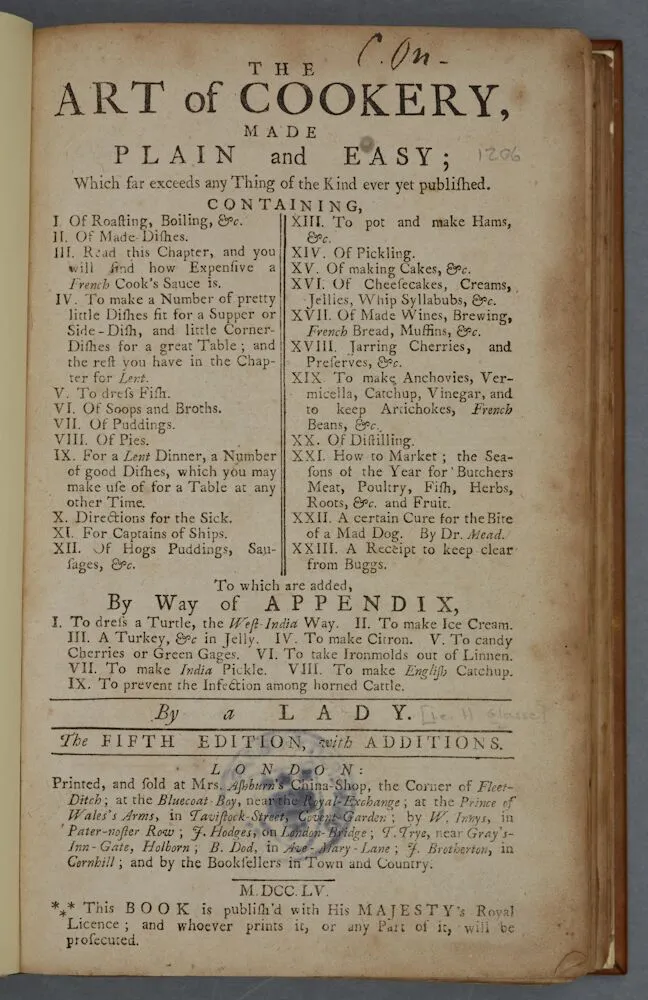 Title page of an 18th-century edition of Hannah Glasse’s The Art of Cookery, Made Plain and Easy, the book whose 1763 edition prints the “Hamburgh Sausage” recipe (Scan: Hannah Glasse (author), public domain, via Wikimedia Commons)
Emigration made the Hamburg link stronger. The Hamburg-Amerika Linie, founded in 1847, became a major carrier of German emigrants to America in the second half of the 19th century (EBSCO). Some historians also point to the Rundstück warm, a Hamburg roll filled with hot roast meat and gravy, as a possible ancestor. That lineage is still debated (Wikipedia, Rundstück warm).
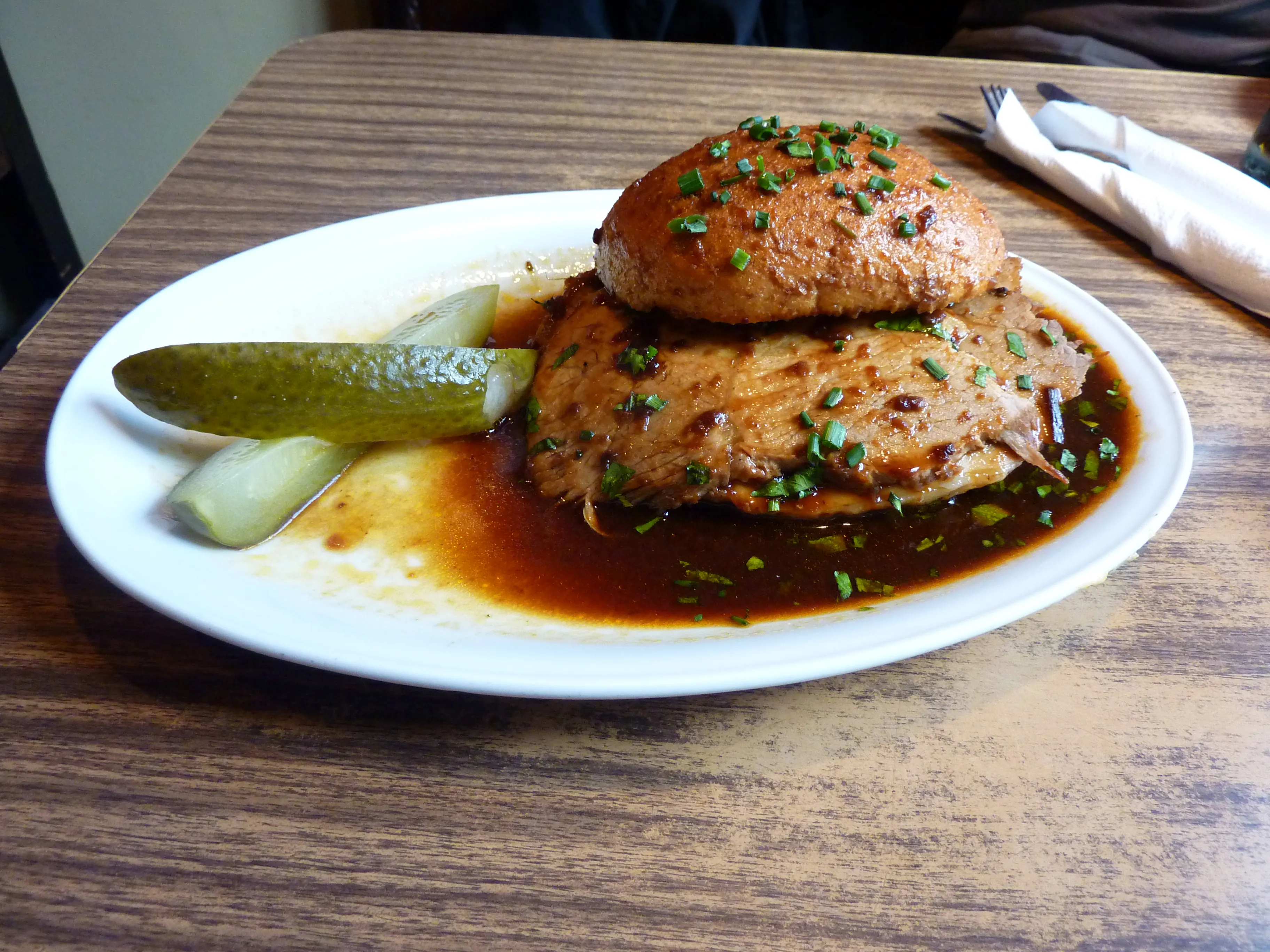 A Rundstück warm, the Hamburg roll filled with hot roast meat and gravy, served at the Oberhafenkantine in Hamburg: a possible but debated ancestor of the hamburger (Photo: 1971markus, CC BY-SA 3.0 DE, via Wikimedia Commons)
On 19 January 1873, the New York Times described the Hamburg steak as “a beefsteak redeemed from its original toughness by being mashed into mince-meat.” That is the first known printed description in the US (Barry Popik). Then, in 1894, an ad in Moulton, Texas offered “Hamburger steak sandwiches every day in the week at Barny’s Saloon.” Burger historian George Motz cites it as the oldest printed mention of a ground-steak sandwich (Wikipedia, History of the hamburger in the United States). To me, that small-town ad is worth more than any of the famous invention stories. It is the only one printed at the time.
Who invented the hamburger? The claims ranked by evidence
No one can prove who invented the hamburger. All five classic claims date from 1885 to 1904, and none is backed by a document from the time. Louis’ Lunch in New Haven has the strongest case. Strongest does not mean proven.
| Claimant | Place and date | What the claim rests on | Evidence |
|---|---|---|---|
| Louis Lassen, Louis’ Lunch | New Haven, Connecticut, c. 1900 | Restaurant’s own account; Library of Congress recognition according to the restaurant and Wikipedia | Claimed (best supported) |
| Charlie Nagreen, aged 15 | Seymour fair, Wisconsin, 1885 | Local tradition; named “Home of the Hamburger” by Wisconsin in 2007 | Claimed |
| Frank and Charles Menches | Erie County Fair, Hamburg, New York, 1885, or Summit County Fair, Akron, Ohio, 1892 | John C. Kunzog’s book Tanbark & Tinsel (1970); their obituary gives 1892 | Claimed (contradictory) |
| Fletcher “Old Dave” Davis | Athens, Texas, late 1880s; St. Louis World’s Fair 1904 | Account spread by journalist Frank X. Tolbert; named “Original Home of the Hamburger” by Texas in 2006 | Claimed |
| Oscar Weber Bilby | Farm near Tulsa, Oklahoma, 4 July 1891 | Family account researched by Michael Wallis; Governor Frank Keating’s 1995 proclamation | Claimed |
| Mongol riders, Genghis Khan, steak tartare | Medieval Central Asia | No documentary evidence | Legend |
Louis’ Lunch, New Haven: the strongest claim
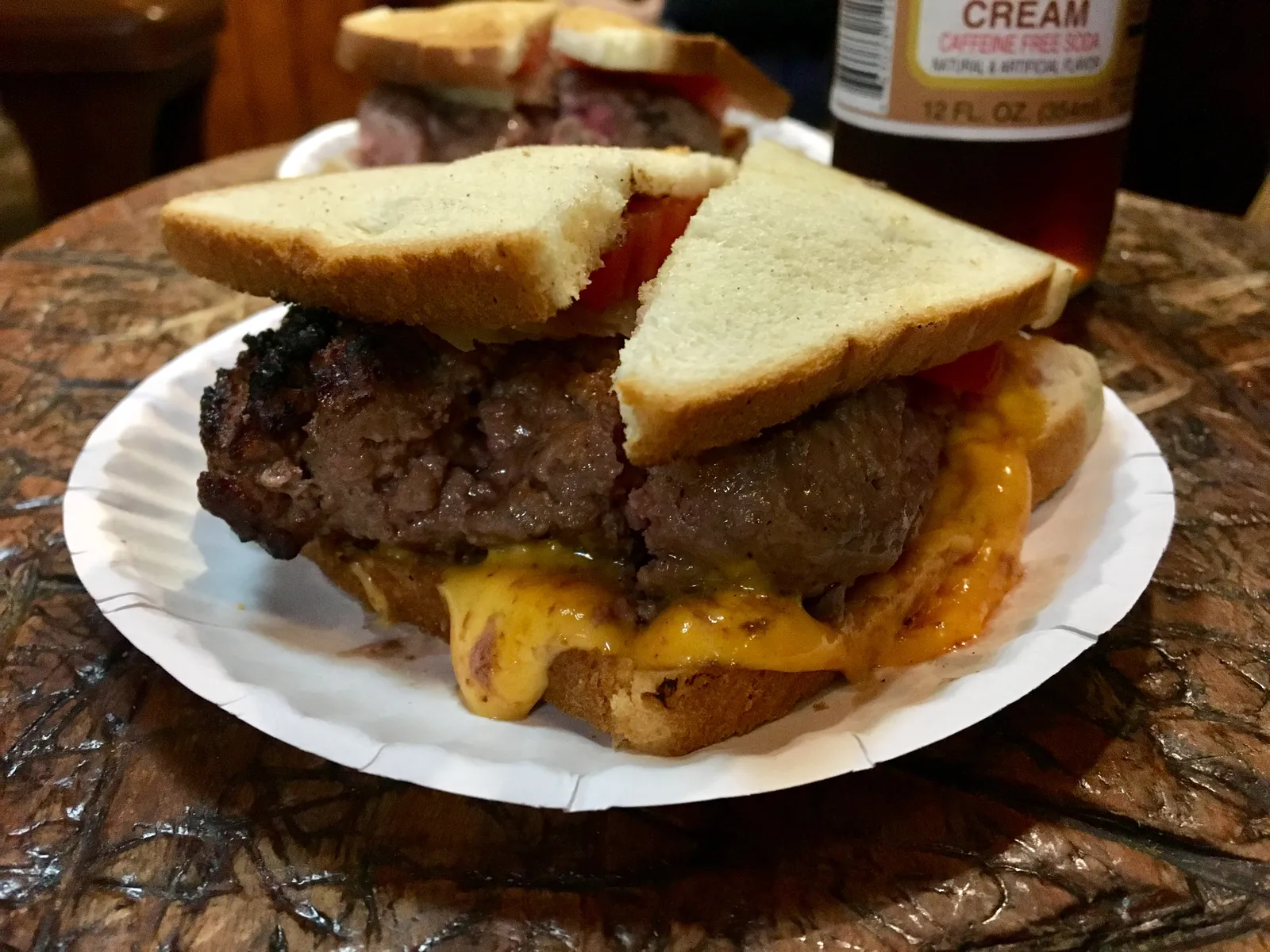
Louis’ Lunch has the best-documented claim to the hamburger sandwich, but no primary source has ever confirmed its date. The restaurant, at 261 Crown Street, says it was established in 1895. It says Louis Lassen created the ground-steak sandwich between two slices of toasted bread around 1900, for a customer in a hurry (louislunch.com).
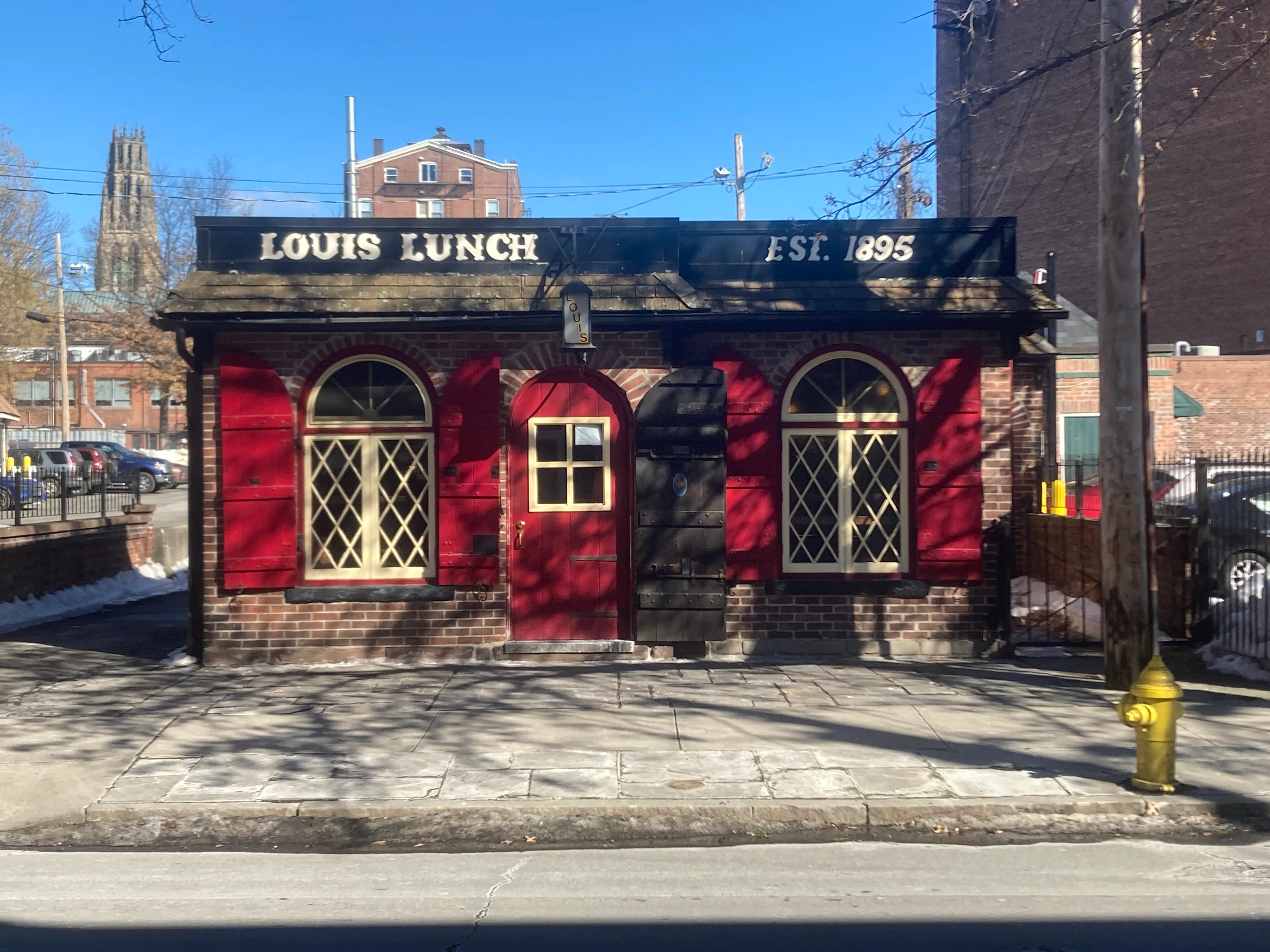 The brick front of Louis’ Lunch at 261 Crown Street, New Haven, which says it was established in 1895 and holds the best-supported claim to the hamburger sandwich (Photo: Susmuffin, CC BY 4.0, via Wikimedia Commons)
According to the restaurant and Wikipedia, the Library of Congress recognizes Louis’ Lunch as the “birthplace of the hamburger sandwich” (Wikipedia, Louis’ Lunch). I tried to read the original Library of Congress text. The page now returns a 404, so I treat the recognition as reported, not verified. The date 28 May 1900 also circulates widely online. I found no primary source for it.
If I had to hand the title to one place, it would still be Louis’ Lunch. Not because its story is proven, but because it is the only claimant still making the sandwich the way it says it always has.
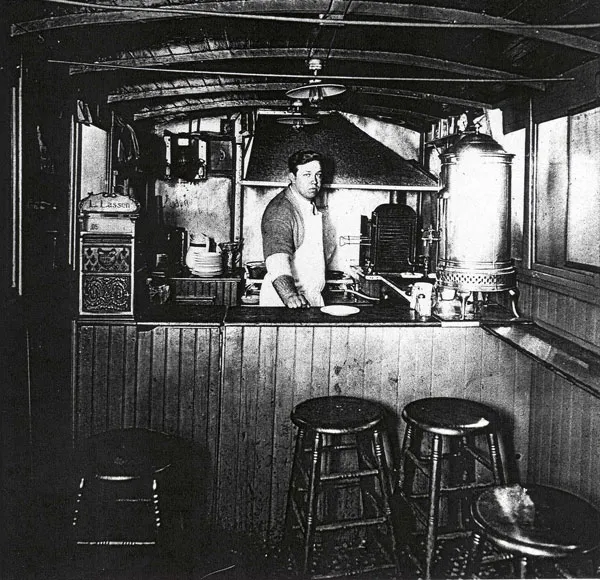 Louis Lassen’s Louis’ Lunch wagon in New Haven, Connecticut, photographed between 1907 and 1916, before the restaurant moved to 261 Crown Street (Photo: unknown author, public domain, via Wikimedia Commons)
Seymour, Athens, Tulsa and Hamburg: state pride and family stories
Three US states have officially named three different towns as the hamburger’s birthplace, which tells you more about local pride than about history. Wisconsin named Seymour “Home of the Hamburger” in 2007, and the town holds a Burger Fest every August. Texas named Athens “Original Home of the Hamburger” in 2006. In April 1995, Governor Frank Keating proclaimed Tulsa “The Real Birthplace of the Hamburger” (Oklahoma proclamation, PDF). A proclamation is a vote, not a source.
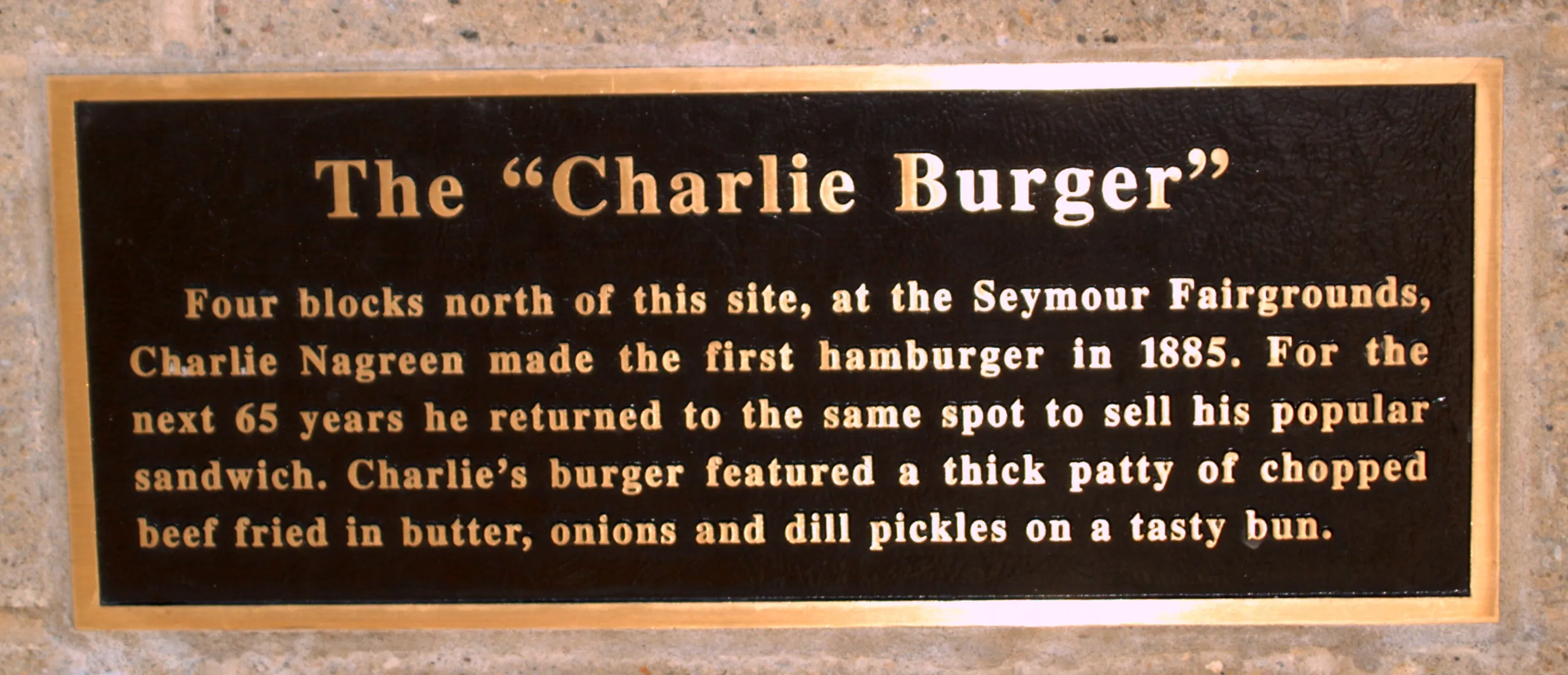 “The Charlie Burger” plaque on the Hamburger Charlie statue in Seymour, Wisconsin, named “Home of the Hamburger” by the state in 2007: a claim, not proof (Photo: WIMHARTER, CC BY-SA 3.0, via Wikimedia Commons)
The Menches story shows how shaky these claims are. The family account puts it at the 1885 Erie County Fair in Hamburg, New York. The brothers’ own obituary moves it to 1892, in Akron, Ohio. Both versions are still in circulation. Neither can be checked against a record from the time.
Hamburger myths debunked: Delmonico’s 1834 and the Mongol tartare
The two most-repeated hamburger origin stories are false or unsupported: the 1834 Delmonico’s menu is a later fake, and the Mongol “meat under the saddle” story has no documentary evidence at all.
The fake 1834 Delmonico’s menu
The Delmonico’s bill of fare dated 1834 that lists a “Hamburg steak” is a forgery. Ellen F. Steinberg and Jack H. Prost showed it in Gastronomica in spring 2008. The typography dates from the 1880s. The address on the menu, 494 Pearl Street, belonged to an unrelated “Small Delmonico’s” run by a man named Barnabo in the 1880s. Between 1827 and 1835, the real Delmonico’s stood at 23–25 William Street (Gastronomica; Restaurant-ing Through History).
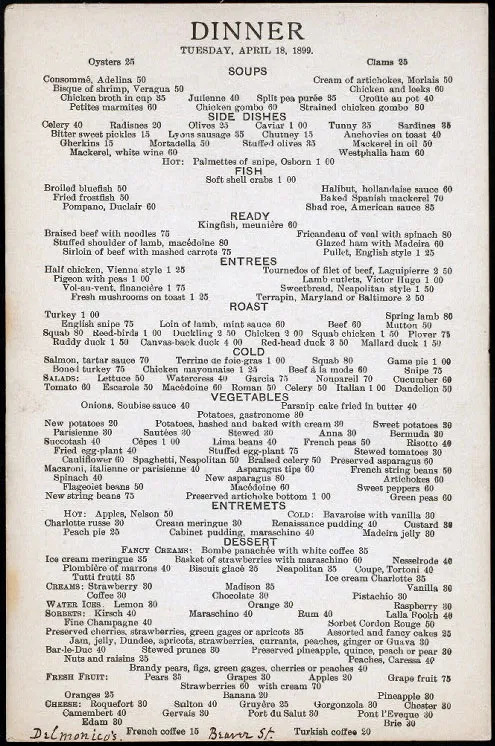 A genuine Delmonico’s menu from April 1899, shown for comparison: the “1834” Delmonico’s bill of fare listing a Hamburg steak is an 1880s forgery (Steinberg and Prost, Gastronomica, 2008) (Scan: unknown author, public domain, via Wikimedia Commons)
Genghis Khan, steak tartare and the Mongol saddle
The idea that the hamburger descends from Mongol horsemen tenderizing raw meat under their saddles is a legend. No document supports it. It still turns up in plenty of articles as if it were fact, often with steak tartare cast as the missing link. Folklore, not hamburger history.
First hamburger restaurant and the bun: Louis’ Lunch, Walter Anderson and White Castle
Louis’ Lunch is the oldest hamburger restaurant still open. White Castle, founded in Wichita in 1921, was the first hamburger fast-food chain, and its co-founder Walter Anderson is often credited with the modern bun.
Louis’ Lunch still cooks its burgers in cast-iron vertical grills dating from 1898. It serves them on toasted white bread, not on a bun (louislunch.com). That is the place to taste the oldest surviving version of the sandwich.
Map of Louis’ Lunch, 261 Crown Street, New Haven, Connecticut, the oldest hamburger restaurant still open (Map: © OpenStreetMap contributors, ODbL)
The bun came later. Walter Anderson opened a hamburger stand in Wichita, Kansas in 1916 and is often credited with creating the modern hamburger bun. To bake one yourself, follow our homemade burger buns recipe.
In 1921, Anderson and Billy Ingram founded White Castle in Wichita with $700 in starting capital. It is considered the first hamburger fast-food chain. From 1931 it sold its small burgers under the slogan “Buy ’em by the sack” (Wikipedia, White Castle; KCUR). Sources disagree on the month it opened, so I give only the year.
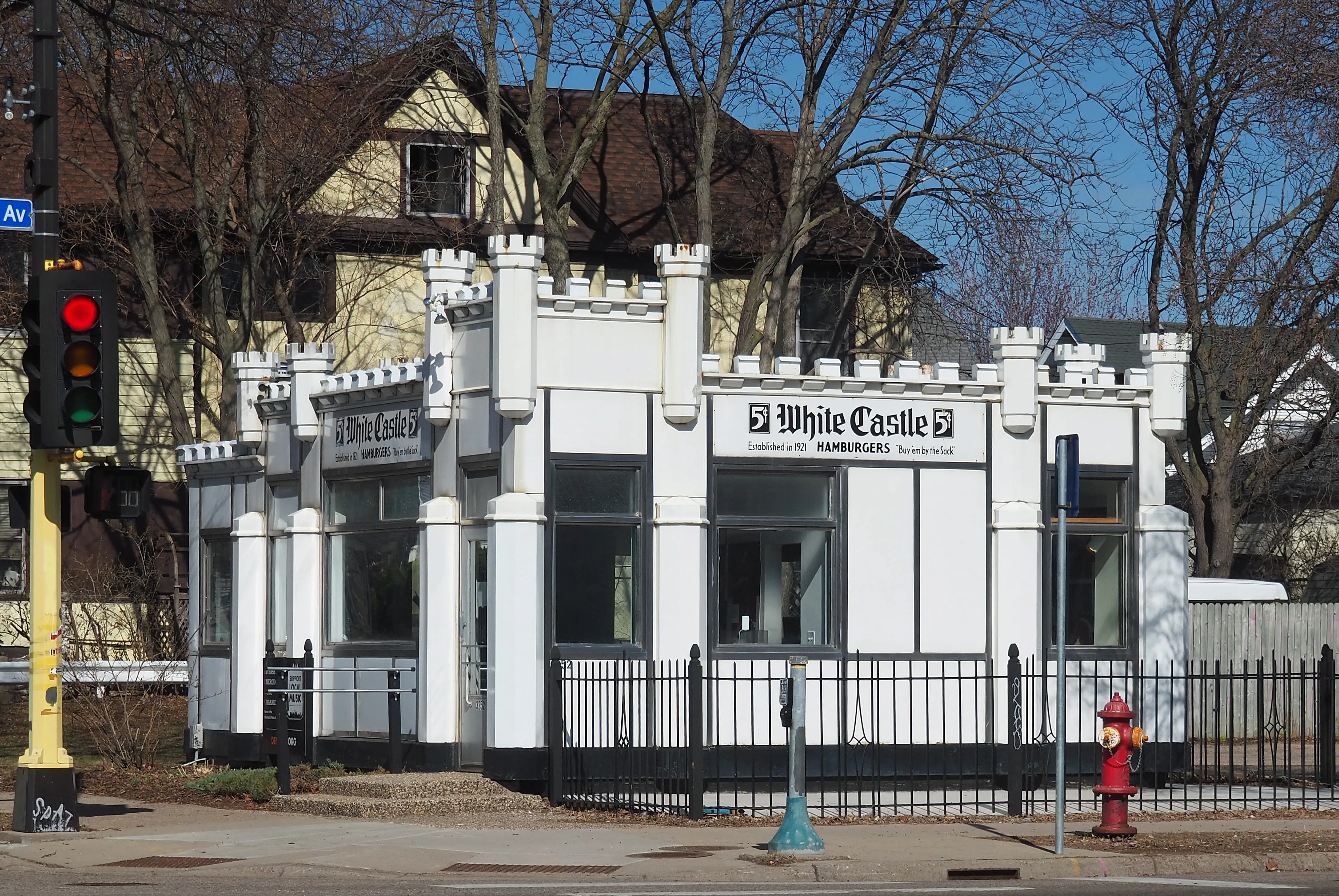 White Castle Building No. 8 in Minneapolis, a 1936 porcelain-enamel stand from the first hamburger fast-food chain, founded in Wichita in 1921, now on the National Register of Historic Places (Photo: McGhiever, CC BY-SA 4.0, via Wikimedia Commons)
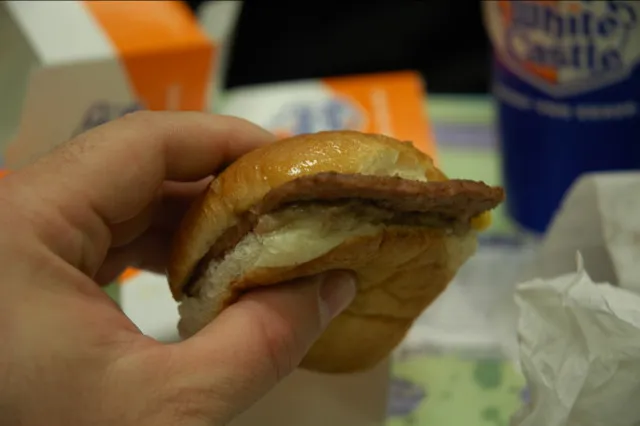 A White Castle slider, the small square hamburger sold “by the sack” since 1931 (Photo: ben britten, CC BY 2.0, via Wikimedia Commons)
Who invented the cheeseburger?
Lionel Sternberger claimed he invented the cheeseburger at the Rite Spot in Pasadena, California, sometime between 1924 and 1926. A 1928 menu from the O’Dell Restaurant in Los Angeles already lists burgers with cheese. Kraft started selling sliced processed cheese in 1950, and that slice became the classic American cheeseburger topping (Wikipedia).
The fast-food hamburger: McDonald’s, Burger King and Wendy’s
Fast food turned the hamburger into a cheap, standardized product, starting with the McDonald brothers’ 15-cent burger in 1948. Ray Kroc’s franchising and the rival chains of the 1950s and 1960s then took it nationwide.
Dick and Mac McDonald opened McDonald’s Bar-B-Q in San Bernardino, California in 1940. In 1948 they switched to the Speedee Service System, with a short menu and a hamburger for 15 cents (McDonald’s Corporation). In my view, that price did more for the burger than any of the five invention claims. Value pricing still drives the industry, as our coverage of the 2026 burger value wars shows.
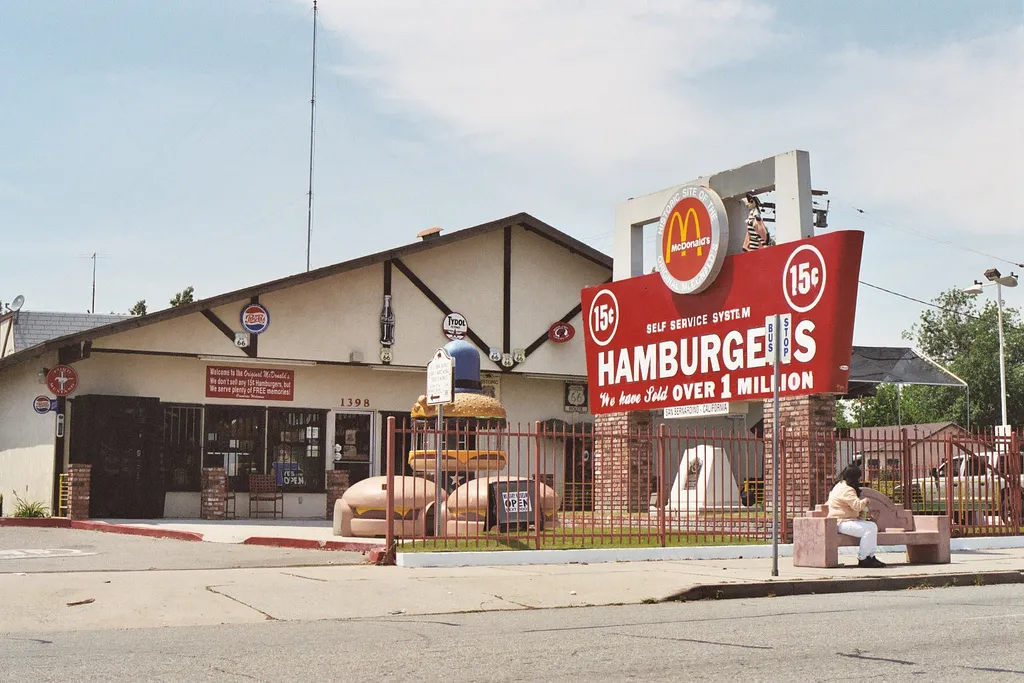 Site of the McDonald brothers’ first restaurant in San Bernardino, California, where the 15-cent hamburger and the Speedee Service System launched in 1948, now an unofficial museum (Photo: Cogart Strangehill, CC BY-SA 2.0, via Wikimedia Commons)
Ray Kroc opened his first franchised McDonald’s in Des Plaines, Illinois on 15 April 1955. Two years later, Burger King launched the Whopper at 37 cents; our Whopper ingredients and copycat recipe shows what goes into it today. In 1967, Pittsburgh franchisee Jim Delligatti created the Big Mac. Dave Thomas founded Wendy’s in Columbus, Ohio on 15 November 1969.
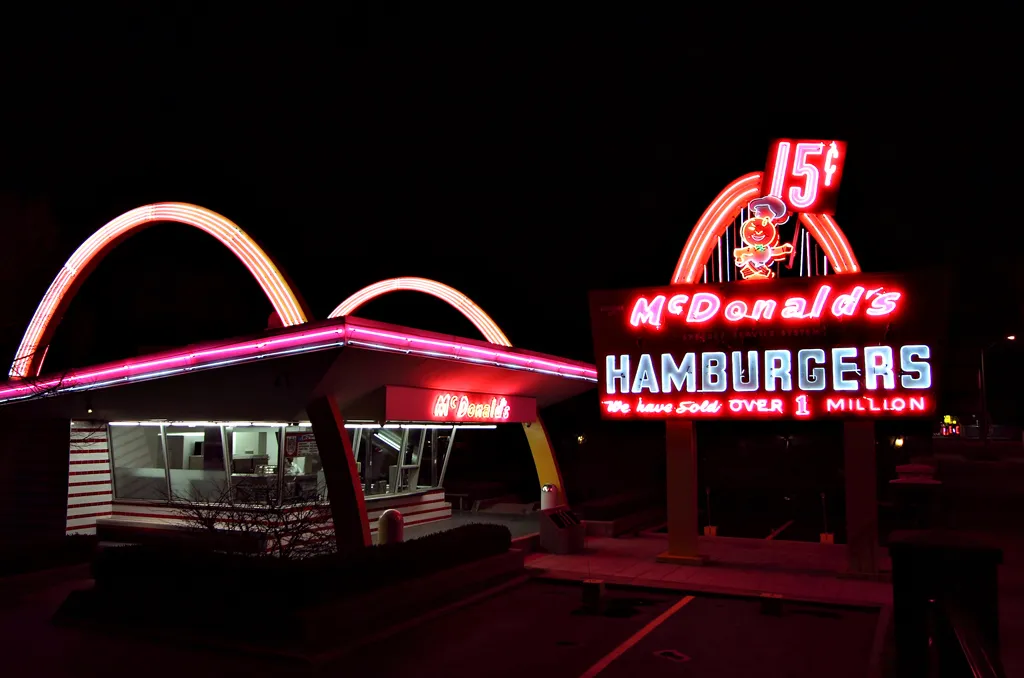 McDonald’s #1 Store Museum in Des Plaines, Illinois, a replica of the first restaurant Ray Kroc franchised on 15 April 1955 (Photo: Jerry Huddleston, CC BY 2.0, via Wikimedia Commons)
Fast-food hamburger launch prices: McDonald’s hamburger at 15 cents (1948) vs Burger King Whopper at 37 cents (1957) (Chart: Burger Breton from McDonald’s Corporation and Burger King data, rendered with QuickChart; CC BY 4.0)
| Chain or burger | Year | Key fact |
|---|---|---|
| White Castle | 1921 | First hamburger fast-food chain, Wichita |
| McDonald’s Speedee system | 1948 | 15-cent hamburger, San Bernardino |
| First Ray Kroc McDonald’s | 1955 | Des Plaines, Illinois |
| Burger King Whopper | 1957 | 37 cents at launch |
| Big Mac | 1967 | Created by Jim Delligatti, Pittsburgh |
| Wendy’s | 1969 | Founded by Dave Thomas, Columbus, Ohio |
How the hamburger went global: UK, Europe and Asia
The hamburger left the US through chains from the 1950s onward. Wimpy reached Britain in 1954, years before McDonald’s opened in Europe, and it carried the burger to France too.
- United Kingdom: Wimpy arrived in 1954. By 1970 it had more than 1,000 restaurants in 23 countries.
- France: The first hamburger restaurant was a Wimpy in Paris’s 2nd arrondissement, opened on 31 May 1961 by industrialist Jacques Borel (Paris ZigZag). The first McDonald’s opened in Créteil on 30 June 1972 under franchisee Raymond Dayan. After a dispute it was renamed O’Kitch, and McDonald’s officially counts Strasbourg (1979) as its first French restaurant (Wikipedia, McDonald’s France).
- Spain: Foster’s Hollywood opened at 1 Calle Magallanes, Madrid, in 1971. The first Burger King in Spain followed in Madrid in 1975, and the first Spanish McDonald’s opened on the Gran Vía in 1981.
- Japan: MOS Burger was founded in 1972.
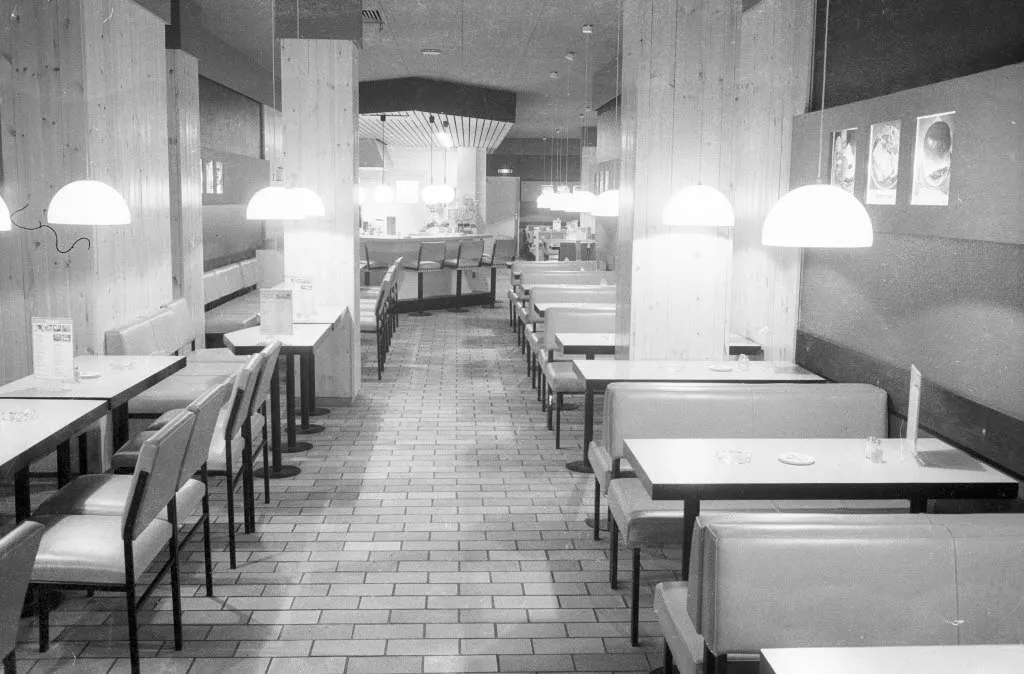 A Wimpy snack bar on Holstenstraße in Kiel, Germany, in January 1974: the British chain had passed 1,000 restaurants in 23 countries by 1970 (Photo: Friedrich Magnussen, CC BY-SA 3.0 DE, via Wikimedia Commons)
Map of Madrid’s first burger chains: Foster’s Hollywood (1 Calle Magallanes, 1971), Burger King (Calle Princesa / Plaza de los Cubos, 1975) and McDonald’s (Gran Vía, 1981) (Map: © OpenStreetMap contributors, ODbL)
Germany grew its own burger counters too. Udo Snack has served burgers and fries in Stuttgart since 1964. Our visit to Udo Snack in Stuttgart shows what one of those early European counters looks like today.
The burger has since taken on even the most local food habits. In France, according to Gira Conseil, burger sales overtook the jambon-beurre (the classic ham-and-butter baguette) for the first time in 2017, with about 1.46 billion burgers sold, up 9% (Ma Commune Info). I found no verified figure for later years.
The modern hamburger: better burgers, lab-grown and plant-based
Since 2010 the hamburger has moved in two directions at once: premium “better burger” chains on one side, new proteins grown in labs or made from plants on the other.
On 5 August 2013 in London, the first cultured-beef burger was cooked and tasted in public. Mark Post developed it at Maastricht University, at an announced cost of about €250,000 (New Food Magazine). On 27 July 2016, the plant-based, heme-powered Impossible Burger made its restaurant debut at David Chang’s Momofuku Nishi in New York (Impossible Foods).
Video: Mark Post explains how the first lab-grown hamburger was made from cultured beef cells (World Economic Forum, 2015, in English) (Video: World Economic Forum, CC BY 3.0, via Wikimedia Commons)
Better-burger chains have also changed what people expect from a burger at home. To try that style yourself, start with our Shackburger copycat recipe or the Five Guys cheeseburger copycat. The big chains keep changing their menus, too: see what’s new at Burger King in 2026 and McDonald’s new burgers for 2026, or browse the Burger Breton news hub.
Sources and methodology
This timeline relies only on dated sources, each linked where it is cited. The main references are Andrew F. Smith, Hamburger: A Global History (Reaktion Books, 2008); Steinberg and Prost in Gastronomica 8(2), 2008; Barry Popik’s etymology of “hamburger”; Wikipedia’s History of the hamburger and History of the hamburger in the United States; Louis’ Lunch; the 1995 Oklahoma proclamation; and McDonald’s corporate history. I checked every source on 8 October 2026. Three items circulate online that I could not trace to a primary source, so I left them out: a reported 1873 Delmonico’s menu with an 11-cent Hamburg steak, an 1826 Delmonico’s menu, and an 1863 English newspaper mention.
FAQ: hamburger history questions
Who really invented the hamburger? Nobody can prove it. Louis Lassen of Louis’ Lunch (New Haven, c. 1900) has the best-supported claim. Charlie Nagreen, the Menches brothers, Fletcher Davis and Oscar Weber Bilby all have rival claims from 1885 to 1904, based on family stories or state proclamations.
Why is it called a hamburger? The name comes from Hamburg, Germany, through the “Hamburg steak,” minced beef described in the New York Times in 1873. An English recipe for “Hamburgh Sausage” already appeared in 1763. “Ham” has nothing to do with it: a hamburger contains no ham.
Did the hamburger come from Mongol horsemen and steak tartare? No. The story of Mongol riders tenderizing meat under their saddles has no documentary evidence. It is a legend.
Was the hamburger on Delmonico’s menu in 1834? No. The 1834 Delmonico’s menu is a fake printed in the 1880s, as Steinberg and Prost showed in Gastronomica in 2008.
What is the oldest hamburger restaurant still open? Louis’ Lunch at 261 Crown Street, New Haven, Connecticut. It says it was established in 1895 and still grills its burgers in cast-iron vertical grills from 1898.
What was the first hamburger fast-food chain? White Castle, founded in Wichita, Kansas in 1921 by Billy Ingram and Walter Anderson with $700 in capital.
When was the hamburger first served on a bun? No one knows for sure. Oscar Weber Bilby’s family says he served beef on homemade buns in 1891. Walter Anderson, who opened his Wichita stand in 1916, is most often credited with the modern bun.
Who invented the cheeseburger? Lionel Sternberger claimed it at the Rite Spot in Pasadena between 1924 and 1926. A 1928 O’Dell Restaurant menu in Los Angeles already lists burgers with cheese.
When did the hamburger reach the UK? Wimpy brought the hamburger to Britain in 1954. By 1970 the chain had more than 1,000 restaurants in 23 countries.