Burger Patty Guide: Best Beef, Internal Temp and Cooking Methods
How to choose the beef, shape and season the patty, and cook it to a safe 160°F (71°C) in a skillet, on a griddle or grill, or smash-style.
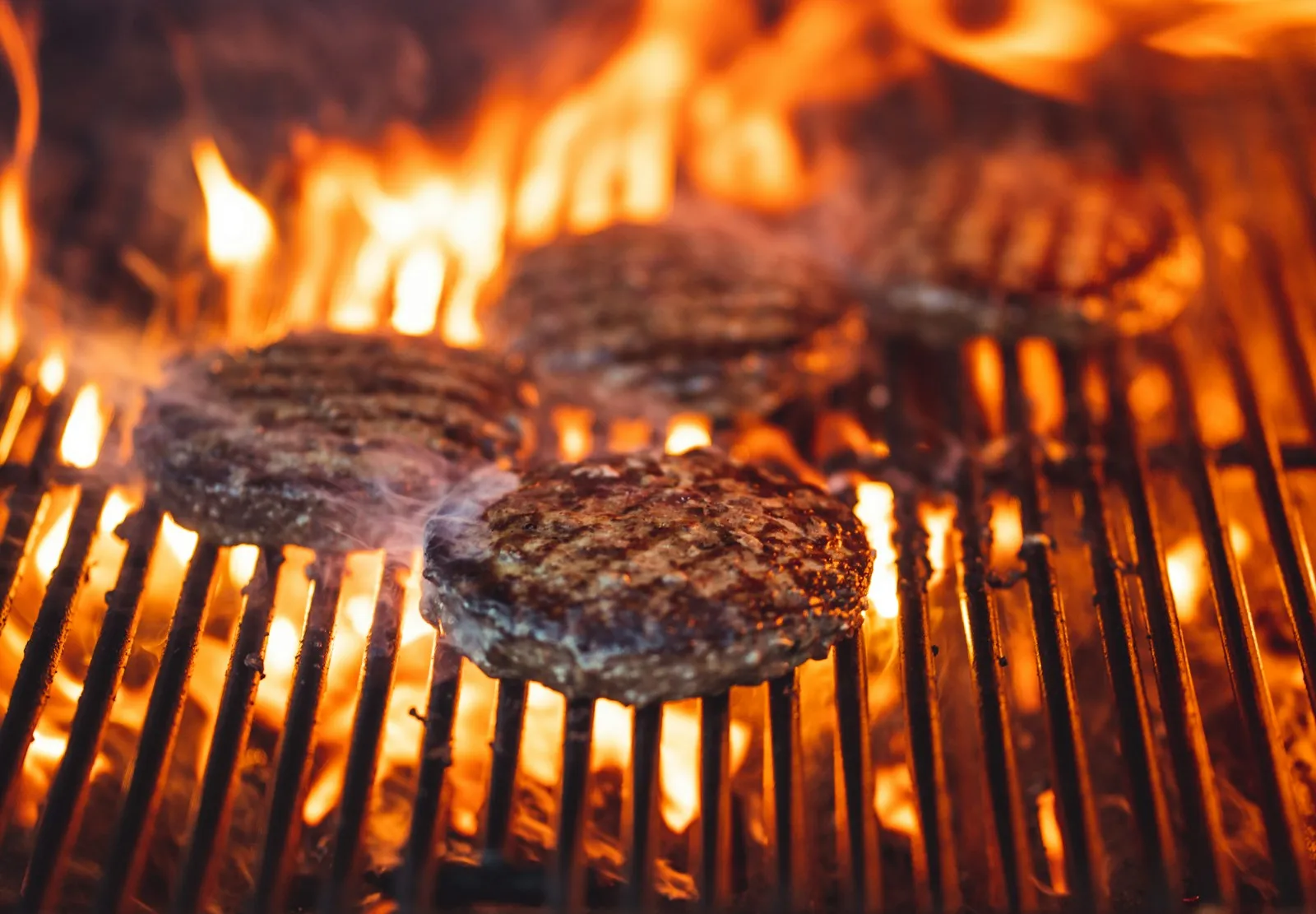
A great burger patty starts with cold 80/20 ground chuck. Shape it about 20% wider than the bun, press a dent into the center with your thumb, and salt only the outside, right before it goes onto a very hot surface. Cook it to an internal temp of 160°F (71°C), checked with a thermometer pushed in through the side. That is the safety threshold the USDA and Health Canada set for ground beef. You can’t judge it by the color of the meat.
I test every patty in my own kitchen and weigh everything to the gram. Most burger pages split this subject into five articles. Here it is in one: the beef, the weight, the salt question, a temperature chart tied to food safety rules, and the skillet, griddle, grill and smash methods side by side. The base recipe with numbered steps is at the end. For more techniques, browse the Burger Breton recipes section.
Burger patty essentials at a glance
Six decisions cover almost everything about a homemade burger patty.
- Beef: 80/20 ground chuck (80% lean, 20% fat).
- Weight: 1/4 lb (113 g) or 1/3 lb (151 g) per patty. For a smash burger, use 2 oz (57 g) balls.
- Shape: about 20% wider than the bun, with a thumb dent in the center.
- Salt: on the surface only, right before cooking.
- Safe internal temp: 160°F (71°C) for ground beef (USDA, Health Canada).
- Crust: browning starts around 285°F (140°C) at the surface, so the patty has to be dry and the pan has to be hot.
Best ground beef for burgers: why 80/20 chuck wins
The standard ground beef for a juicy burger is 80/20 (80% lean, 20% fat), ground from chuck. The fat keeps the patty moist through a high-heat sear. Chuck brings the beefy flavor. Every patty recipe on this site uses 80/20, and I’ve never found a reason to change that.
Very lean grinds are the usual mistake. A 90/10 or 93/7 pack looks like the sensible choice at the grocery store, but there’s too little fat to carry the patty to 160°F (71°C) and it comes out dry and crumbly. Leave the lean packs for chili.
80/20 vs 85/15 ground beef
Choose 80/20 over 85/15 if you want the juiciest patty. 85/15 has a quarter less fat than 80/20, so you have less margin for error once the patty reaches 160°F (71°C). If 85/15 is all the store has, I’d still buy it. I just watch the thermometer more closely.
| Ground beef | Lean / fat | Best use for burgers |
|---|---|---|
| 80/20 chuck | 80% / 20% | The reference for thick patties and smash burgers |
| 85/15 | 85% / 15% | Works, but less juicy at a safe internal temp |
| 90/10 and leaner | 90% / 10% or more lean | Not recommended for burgers |
Chuck, brisket and short rib blends
Burger blends mix chuck with richer cuts like brisket and short rib. The best-known example is Pat LaFrieda’s Original Burger Blend, made from American Black Angus chuck, brisket and short rib. LaFrieda tested more than 20 blends for Shake Shack, and that recipe is still secret (LaFrieda, Saveur). My advice at the butcher counter: start with plain chuck at 80/20. Learn what that tastes like before you pay for a blend.
How much meat per burger patty
A standard American burger patty weighs 1/4 lb (4 oz, 113 g) or 1/3 lb (about 5.3 oz, 151 g). Habits differ elsewhere. French home cooks aim for about 120 g, and Spanish sources range from 100 to 150 g, with Directo al Paladar going up to 180 g.
Smash burgers follow a different logic. Kenji López-Alt makes them with two 2 oz (57 g) balls instead of one 4 oz patty, which gives you two crusts per burger (Good Food).
How to make burger patties that don’t shrink or puff
To shape a good burger patty, work the beef while it’s cold, handle it as little as possible, make it about 20% wider than the bun and press a shallow dent into the center with your thumb (Weber). Knead it and it turns dense.
Some recipes mix egg and chopped shallot into the beef. That’s a meatball, not a burger patty. I keep mine to beef and nothing else.
Why burger patties shrink
Burger patties shrink because the fat melts, water evaporates and the meat proteins contract as they heat. Shaping the patty about 20% wider than the bun makes up for it, so the cooked patty ends up the same width as my homemade burger buns.
Why press a dent in the center
The thumb dent stops the patty from puffing into a dome as it cooks. Skip it and the center rises, the patty turns into a ball and the toppings slide off. With it, the patty cooks flat.
When to salt a burger patty
Salt the outside of the burger patty just before it goes into the pan, and never mix salt into the meat. Salt dissolves a protein called myosin. The myosin then forms a sticky gel that binds the meat into an elastic, sausage-like texture.
America’s Test Kitchen tested this. Patties salted 30 minutes ahead came out dry and springy on the surface (ATK). I salt one side right before the patty goes down and the other side just before I flip it.
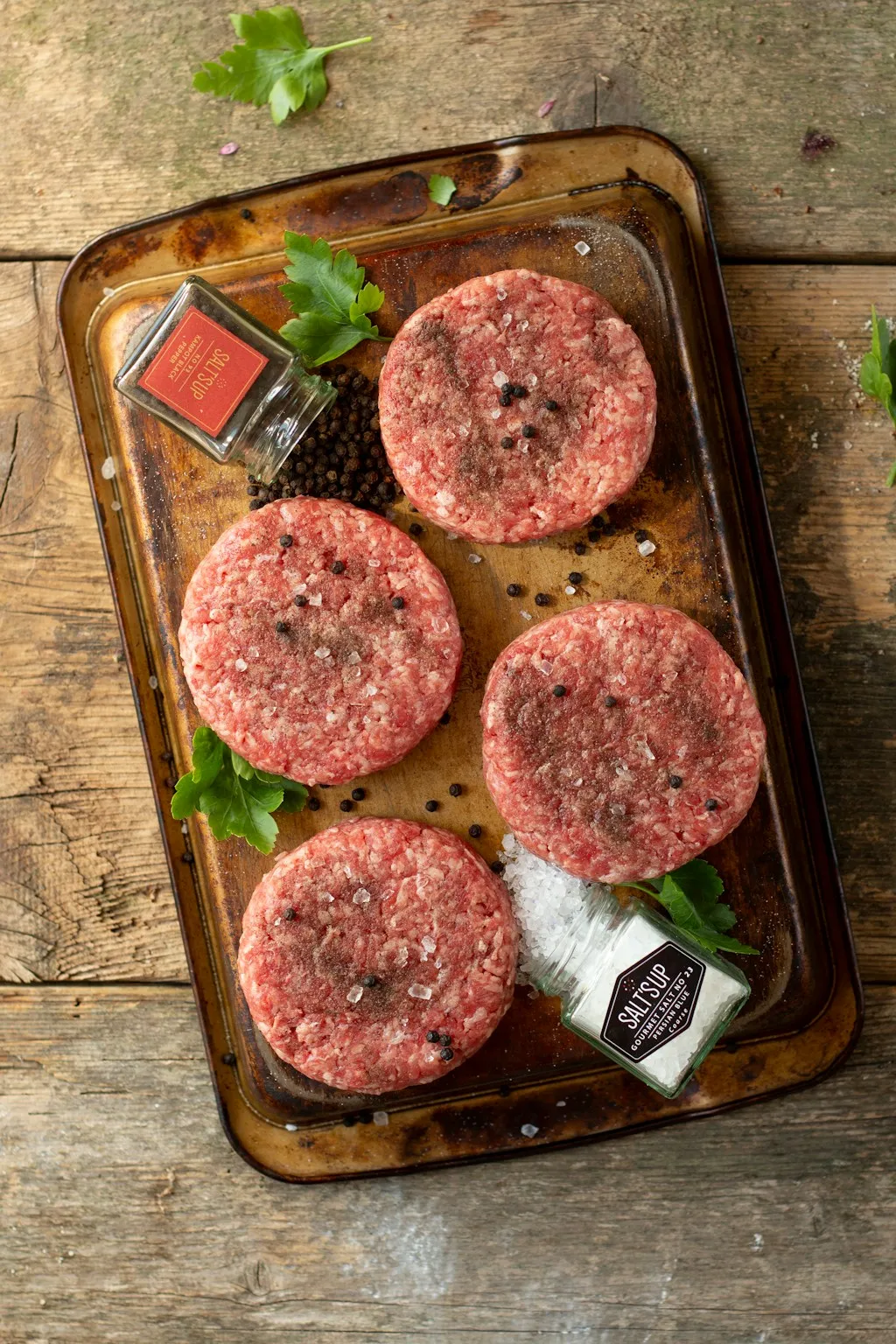 Four raw ground beef burger patties, shaped loosely and seasoned only on the surface just before cooking. Mixing salt into the meat makes it springy and sausage-like. (Photo: Piret Ilver, Unsplash License (https://unsplash.com/photos/92YG7We2xUU))
Burger internal temp: the safe temperature for ground beef
A beef burger is safe at an internal temperature of 160°F (71°C), the threshold set by USDA FSIS for all raw ground beef and by Health Canada for ground meat. Measure it with a thermometer. The look of the meat won’t tell you.
Why ground beef needs more cooking than a steak
Ground beef needs more cooking than a whole steak because grinding spreads the surface bacteria through the whole patty. On a whole cut, bacteria stay on the outside, and a quick sear kills them. That is why a steak can be served rare but a burger patty has to be cooked through (FSA, Health Canada).
Health Canada spells out the difference. A whole beef steak is safe at 145°F (63°C) for medium-rare, 160°F (71°C) for medium and 170°F (77°C) for well done. Ground meat gets one number: 160°F (71°C).
Burger temperature chart by doneness
Only one row of this chart meets the food safety threshold: well done, at 160°F (71°C) or higher. The other ranges are common cooking-blog figures, not official standards (The Cookie Rookie, The Grilling Dad).
| Doneness | Internal temp (°F) | Internal temp (°C) | Meets USDA / Health Canada? |
|---|---|---|---|
| Rare | 130–135°F | 54–57°C | No |
| Medium | 140–145°F | 60–63°C | No |
| Medium-well | 150–155°F | 66–68°C | No |
| Well done | 160°F and up | 71°C and up | Yes |
Burger temperature chart: rare 130–135°F, medium 140–145°F, medium-well 150–155°F and well done 160°F+. Only the well-done band meets the 160°F (71°C) USDA and Health Canada threshold for ground beef. The other bands are cooking-blog ranges, not official standards. (Chart: Burger Breton, data from Health Canada (Open Government Licence – Canada) and USDA FSIS (public domain); doneness ranges from The Cookie Rookie and The Grilling Dad)
Ground beef safety standards in the US, Canada, the UK and Spain
Food safety agencies agree on the core rule: cook ground beef to about 160°F (70–71°C). The UK adds time to the equation.
| Authority | Country | Rule for ground beef and burgers |
|---|---|---|
| USDA FSIS | United States | 160°F (71°C) internal, measured with a thermometer |
| Health Canada | Canada | 160°F (71°C) for ground meat, including burgers, meatballs and sausages |
| Food Standards Agency | England, Wales, Northern Ireland | 158°F (70°C) held for 2 minutes, or 167°F (75°C) for 30 s, 176°F (80°C) for 6 s, 149°F (65°C) for 10 min, 140°F (60°C) for 45 min |
| AESAN | Spain | Cook ground meat and burgers thoroughly to prevent STEC, especially for older people, children and immunocompromised people |
The FSA’s time and temperature pairs all reach the same goal: a 6-log reduction, which means 99.9999% of bacteria are killed. So a burger held at a lower heat for longer can be just as safe as one that briefly hits a higher temperature (FSA guidance, May 2016, updated May 2023; AESAN).
FSA time and temperature equivalents for burgers: 176°F (80°C) for 6 s, 167°F (75°C) for 30 s, 158°F (70°C) for 2 min, 149°F (65°C) for 10 min and 140°F (60°C) for 45 min. Every pair kills 99.9999% of bacteria (a 6-log reduction). (Chart: Burger Breton, data from the Food Standards Agency (Open Government Licence v3.0))
How to take a burger’s temperature
Push the thermometer probe into the side of the patty until the tip reaches the center. Keep it off the pan or grate. A probe pushed in from the top of a thin patty can go straight through and read the heat of the pan instead (Cook’s Country). I made that mistake for years.
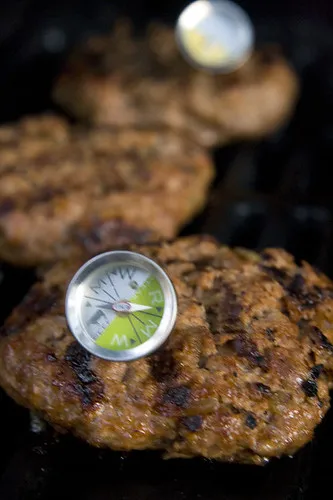 Dial thermometers in grilled burger patties. Color can’t tell you when a burger is done. On a thin patty, push the probe in through the side to the center so it doesn’t touch the grate. (Photo: Didriks, CC BY 2.0 (https://www.flickr.com/photos/49889671@N03/4822104250))
Is the color of a burger a reliable sign of doneness?
No, you can’t tell from the color whether a burger is cooked. A 1995 Kansas State University study cited by the USDA found patties that had turned brown inside before reaching 160°F (USDA FSIS). The reverse happens too. The FSA notes that a sous-vide burger can stay pink and still be safe.
Can you eat a pink or medium-rare burger?
At home, the safe answer is no: cook ground beef to 160°F (71°C). In the UK, restaurants may serve less-than-thoroughly-cooked burgers only under a validated food safety plan (HACCP). No home kitchen has that kind of control. The main risk is STEC, a strain of E. coli. Children, older adults, pregnant women and immunocompromised people are most at risk, so always cook their burgers well done.
How to get a crusty burger without drying it out
To get a crust without drying the patty, put a dry surface onto a very hot pan and take the patty off as soon as it reaches 160°F (71°C). Browning, called the Maillard reaction, starts at about 285°F (140°C) at the surface. A wet surface stays at 212°F (100°C) until the water has evaporated, so it steams instead of searing (Elephorm).
In practice, I pat the patties dry with paper towel and heat the pan until it’s very hot. Then I leave the patty alone until it releases on its own. A hotter pan browns the outside faster, so the patty spends less time cooking and keeps more of its juice.
Burger cooking methods compared: skillet, griddle, grill and smash
Each method gives a different burger. A skillet gives a thick patty an even crust. A griddle cooks a batch evenly. A grill adds char and smoke. Smashing gives you the most crust in the least time. The times below come from Weber and from my own recipe tests. Treat them as a guide and let the thermometer decide.
| Method | Surface heat | Best patty | Cooking time | Crust |
|---|---|---|---|---|
| Skillet (cast iron) | Very hot | Thick, 1/4–1/3 lb | About 5 min per side for a thick patty | Strong, even |
| Griddle (flat-top, plancha) | 340–390°F (170–200°C) | Thick or medium | Until 160°F (71°C), flipped once | Even, moderate |
| Grill (charcoal or gas) | Medium-high, 400–500°F (205–260°C) | Thick | 9–11 min, lid closed, flipped once (Weber) | Char marks, smoky |
| Smash (cast iron, no oil) | About 450°F (230°C) | 2–4 oz balls | 90–180 s total | Maximum, lacy edges |
Skillet burgers
A cast-iron skillet gives a thick patty an even crust across its whole surface, with about 5 minutes per side. It’s my weeknight default. For thinner patties, my Five Guys cheeseburger copycat uses two 80/20 patties cooked 3 to 4 minutes per side to 160°F (71°C), without smashing.
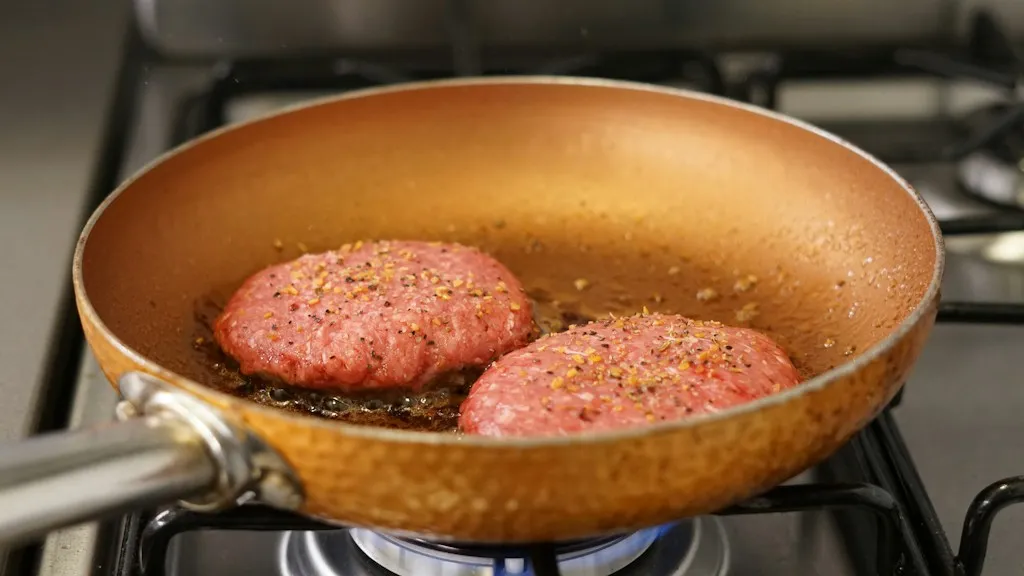 Two thick burger patties in a hot skillet. Plan on about 5 minutes per side and one flip, then take them off at 160°F (71°C). (Photo: Cristian Guillen, Unsplash License (https://unsplash.com/photos/WEMPcnXWxKw))
Griddle (flat-top) burgers
A flat-top griddle at 340–390°F (170–200°C) cooks patties evenly and fits several at once. This is the diner method behind my Whataburger Triple Meat copycat.
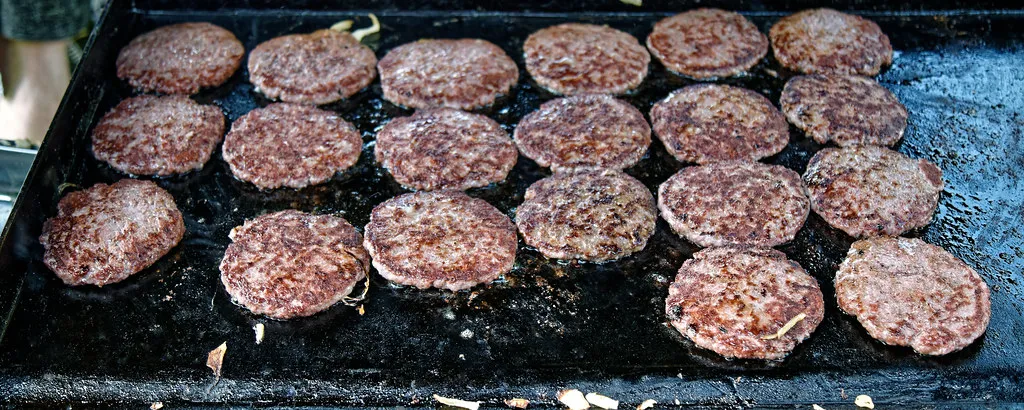 Burger patties cooking side by side on a flat-top griddle. At 340–390°F, the griddle sears them evenly and holds a dozen at once. (Photo: Acabashi, CC BY 2.0 (https://www.flickr.com/photos/150012178@N06/50054256602))
Grilled burgers and cooking time
On a grill at medium-high heat, 400–500°F (205–260°C), a thick patty takes 9 to 11 minutes with the lid closed. Weber flips it once and cooks it to 160°F (71°C) (Weber). Flare-ups are the risk: the dripping fat catches. They’re also where the char flavor of my flame-grilled Triple Whopper copycat comes from.
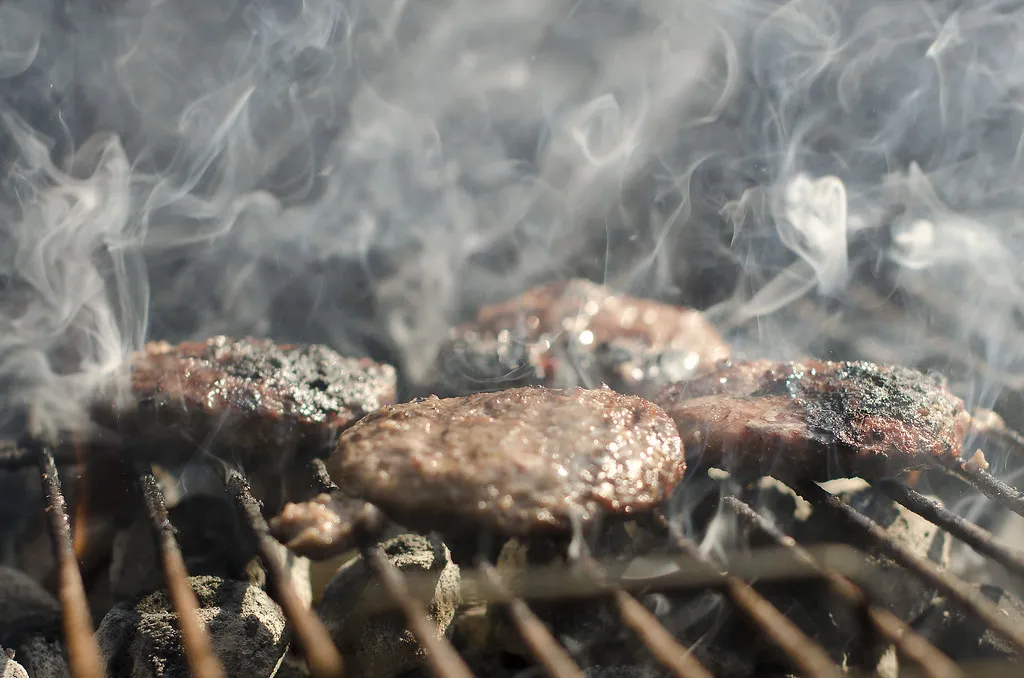 Grilled burgers over charcoal. At medium-high heat (400–500°F), a thick patty takes 9 to 11 minutes with the lid closed and one flip, according to Weber. (Photo: Valters Krontals, CC BY 2.0 (https://www.flickr.com/photos/53442856@N06/7668772348))
Smash burger technique
For a smash burger, put a cold ball of beef onto a smoking-hot, ungreased cast-iron pan or griddle and flatten it right away with a stiff spatula. Flattening puts as much meat as possible in contact with the hot metal. More contact, more crust, and the patty cooks in 90 to 180 seconds (Wikipedia, The Takeout).
My method, tested for my cast-iron smash burger in the Shake Shack style: heat the cast iron to about 450°F (230°C), use a 4 oz (115 g) ball of 80/20, smash once and hold for 10 seconds, then leave it alone for 90 seconds. I don’t buy fattier beef for smashing. The crust comes from the heat and the press, and 80/20 already renders enough fat to fry the edges.
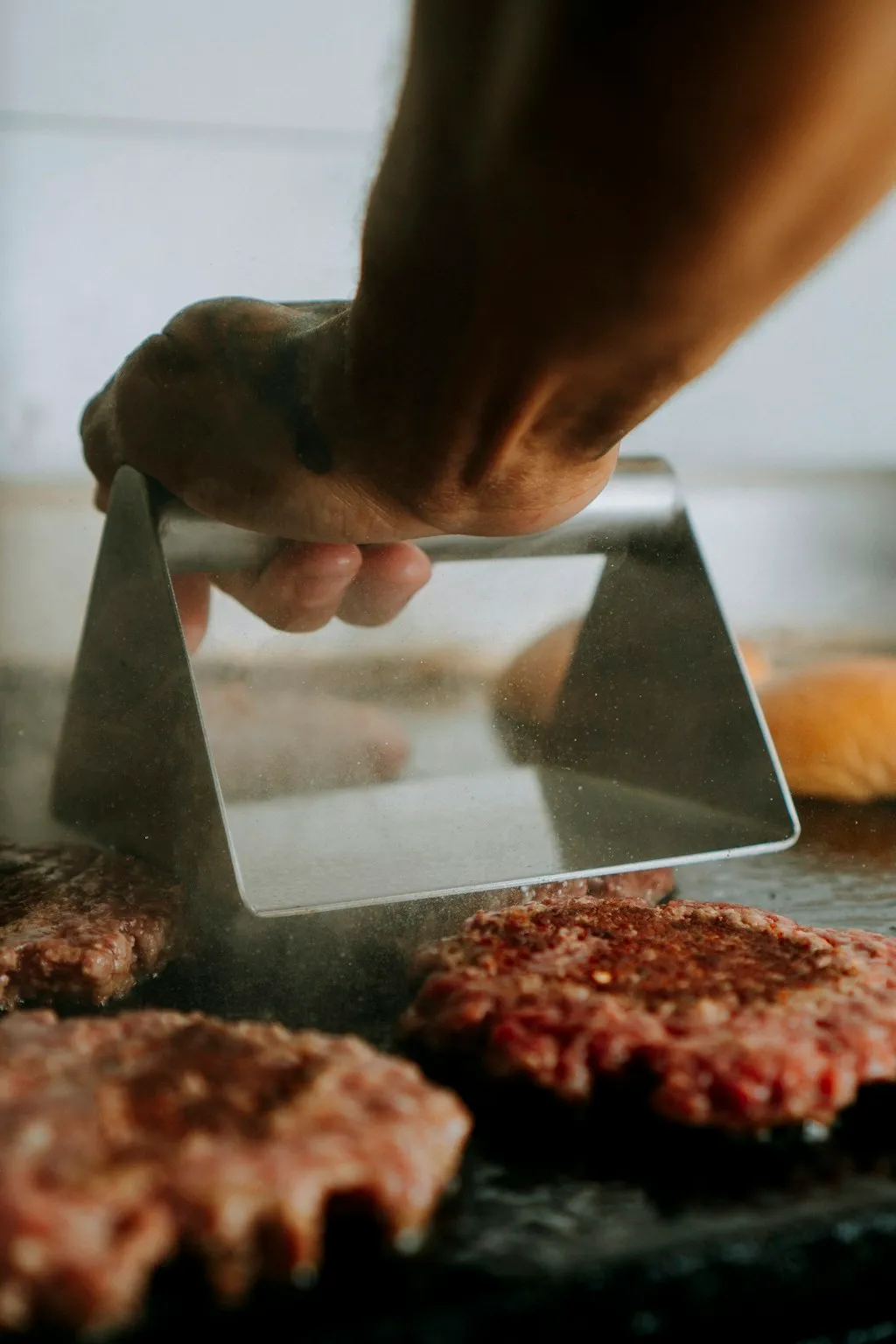 Smash burger technique: a stiff press flattens a cold ball of beef on a smoking-hot, ungreased griddle in the first seconds, which gives the most crust in 90 to 180 seconds. (Photo: Fábio Alves, Unsplash License (https://unsplash.com/photos/w-Y6dVIfbXE))
Smash burger vs regular burger
A smash burger is thin, crusty and cooked in about two minutes. A regular burger is thick, juicy and needs a thermometer to hit 160°F (71°C) in the center. If I’m cooking for a crowd on a Saturday, I smash. For one good burger with a pickle and a cold beer, I want the thick one.
| Smash burger | Regular burger | |
|---|---|---|
| Patty | 2–4 oz ball, flattened in the pan | 1/4–1/3 lb, shaped before cooking |
| Pressing | Once, in the first seconds | Never |
| Pan | Ungreased cast iron, about 450°F (230°C) | Skillet, griddle or grill |
| Cooking time | 90–180 s | About 5 min per side (skillet), 9–11 min (grill) |
| Texture | Lacy, crisp edges, thin | Thick, juicy center |
| Doneness check | Thin patties cook through quickly | Thermometer, 160°F (71°C) |
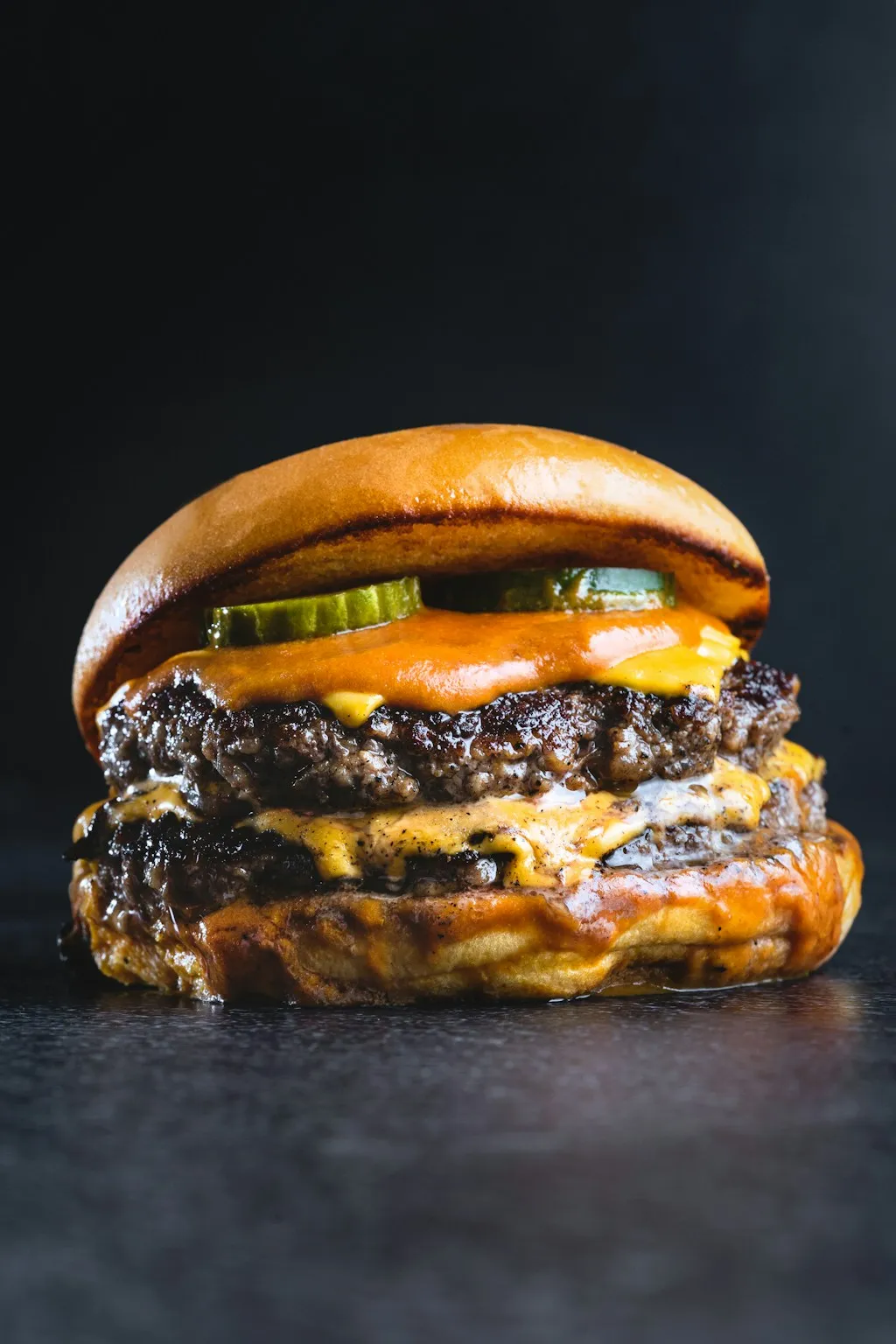 A double smash burger with American cheese and pickles. The two thin patties have lacy, deeply browned edges, the signature of the smash style compared with a thick regular burger. (Photo: Eiliv Aceron, Unsplash License (https://unsplash.com/photos/pu6b4yIlQF4))
Where the smash burger comes from
Nobody can say for sure who invented the smash burger. George Motz traces thin, pressed patties back to the earliest hamburgers. The Dairy Cheer in Ashland, Kentucky, is said to have smashed its patties with a can of beans in the 1960s. Steak ’n Shake popularized the style, and the Smashburger chain opened in Denver in 2007 (Tasting Table). For the bigger picture, read our history of the hamburger.
Burger patty recipe: ingredients
This base recipe makes four 1/3 lb (151 g) burger patties for a skillet, griddle or grill.
- 1 1/3 lb (605 g) 80/20 ground chuck, cold from the fridge
- Kosher salt, for the surface
- Freshly ground black pepper (optional)
- An instant-read thermometer
- Equipment: a cast-iron skillet or flat-top griddle, and a stiff spatula
How to make burger patties step by step
Shape cold, salt late, sear hot and take the patty off the heat at 160°F (71°C).
1. Keep the beef cold
Leave the ground chuck in the fridge until you’re ready to shape it. Cold fat stays firm, so the patty holds together without much handling.
2. Weigh and shape loosely
Divide the beef into four 151 g (1/3 lb) portions on a scale. Pat each portion into a round about 20% wider than your bun, without kneading it.
3. Press the thumb dent
Press a shallow dent into the center of each patty with your thumb. This keeps the patty flat as it cooks instead of doming.
4. Preheat the pan
Heat the cast-iron skillet or griddle until it’s very hot. The surface has to be well above 285°F (140°C) for the crust to form.
5. Dry and salt the surface
Pat the patties dry with paper towel. Salt the top side just before it goes into the pan, never earlier.
6. Sear and flip once
Lay the patties salted side down and salt the top. Leave them alone for about 5 minutes, then flip once. Don’t press down on them.
7. Check the internal temp
Push the thermometer into the side of the patty until the tip reaches the center. Take the patties off the heat at 160°F (71°C) and build the burgers right away.
Burger patty FAQ
Short answers to the questions readers send me most often.
What internal temp should a burger be cooked to?
Cook a ground beef burger to 160°F (71°C), measured in the center with a thermometer. That is the USDA FSIS and Health Canada threshold. The UK’s FSA uses 158°F (70°C) held for 2 minutes.
Is it safe to eat a pink burger?
At home, no. Cook it to 160°F (71°C). Color isn’t reliable either way: a burger can turn brown before it’s safe, and a sous-vide burger can stay pink and be safe. In the UK, only restaurants working under a validated HACCP plan may serve less-than-thoroughly-cooked burgers.
Why does a burger need more cooking than a steak?
Grinding spreads the bacteria from the surface of the meat through the whole patty. On a whole steak they stay on the outside, where the sear kills them. That’s why a steak can be served rare and a burger can’t.
Is 80/20 or 85/15 better for burgers?
80/20 is better for juicy burgers. It has a third more fat than 85/15, which keeps the patty moist at 160°F (71°C). Avoid 90/10 and leaner.
What cut of beef should I ask the butcher for?
Ask for chuck ground at 80/20. If you want to go further, blends like Pat LaFrieda’s mix chuck with brisket and short rib.
How much meat per burger patty?
Use 1/4 lb (113 g) or 1/3 lb (151 g) per patty. For smash burgers, use 2 oz (57 g) balls, two per burger.
When should you salt a burger patty?
Salt the surface just before cooking. Salt mixed into the beef dissolves myosin and gives the patty a springy, sausage-like texture.
Why press a dent in the middle of a patty?
The dent stops the patty from puffing into a dome as the meat contracts. It cooks flat and evenly and sits level on the bun.
How many minutes per side for a burger in a skillet?
About 5 minutes per side for a thick patty, and 3 to 4 minutes per side for thinner ones. The time is only a guide: take the patty off when the thermometer reads 160°F (71°C).
Do you need to oil the pan for burgers?
For a smash burger, no. The technique calls for a smoking-hot, ungreased cast-iron pan or griddle, and the fat in 80/20 beef is enough.
Should you press down on a burger while it cooks?
Only to make a smash burger, and then only once, in the first seconds: I smash for 10 seconds and leave it alone for 90 seconds. Pressing a thick patty just squeezes its juice into the pan.
How can you tell a burger is done without a thermometer?
You can’t, not reliably. A Kansas State University study cited by the USDA found patties that turned brown before reaching 160°F. An instant-read thermometer costs less than a pound of good chuck, and it’s the only test I trust.
Should you let a burger patty rest after cooking?
It isn’t a rule. Unlike whole cuts, ground beef has no rest period required by the USDA, and no food safety authority recommends one. I build the burger straight away.
Why does my burger shrink and puff up?
It shrinks because fat melts, water evaporates and proteins contract. It puffs because the center rises as it cooks. Shape it 20% wider than the bun and press a thumb dent in the center.
Sources
Cooking temperatures and food safety rules come from official agencies. Technique points come from tested cooking sources and my own kitchen tests. All links were checked on October 9, 2026.
- USDA FSIS, ground beef safety and color
- Health Canada, safe internal cooking temperatures
- Food Standards Agency, less than thoroughly cooked beef burgers guidance
- AESAN, preventing STEC infections
- America’s Test Kitchen, When to Salt Burgers
- Cook’s Country, hamburger temperature guide
- Weber, Revealed: The Tricks to a Better Burger
- Pat LaFrieda, Original Blend burger
- Saveur, The Burger King
- Good Food, tips for grilling burgers
- The Takeout, the simple smashed burger
- Tasting Table, history of American chain smash burgers
- Wikipedia, Smash burger
- The Cookie Rookie, burger internal temperature chart
- The Grilling Dad, hamburger temperature guide
- Elephorm, the Maillard reaction